
English| EUR
Suggested for you
More currencies
Choose a language
Determining the true mileage between these locations requires understanding the region's massive footprint. Reaching the main administrative center at 3002 Mount Angeles Road marks just the beginning of the journey. This how far is olympic national park from seattle guide outlines the spatial reality of navigating the surrounding topography.
Quick answer
The geographical center of the reserve sits approximately 110 miles west of the city, but actual driving distances vary based on the destination. Reaching the primary Port Angeles entrance takes roughly 82 miles via maritime transit. The grounds remain accessible from 00:00–23:59 daily, though arriving between 06:00–09:00 helps avoid limited parking. Entry requires a 30 USD standard 7-day vehicle pass.
The wilderness protecting the Olympic Peninsula encompasses nearly a million acres, noticeably devoid of a single road bisecting its rugged interior. This geographical anomaly complicates the standard equation of travel. When planners ask how far is olympic national park from seattle, they must first identify which specific ecosystem they intend to reach. The protected reserve functions more like a massive landlocked island, requiring visitors to navigate its expansive perimeter along US Highway 101. The distance to the high-alpine vistas differs vastly from the sheer mileage required to stand on the driftwood-strewn Pacific coast. Understanding this vast layout shifts the perspective from a simple point-to-point calculation to a complex regional expedition. Reaching the northern boundary near the Salish Sea involves crossing the deep waters of Puget Sound, achieved either over the floating span of the Hood Canal Bridge or via state-run maritime transit. The main administrative headquarters sits on the northern edge in Port Angeles, which serves as a frequent benchmark. However, journeying further west toward the glacier-carved valleys of the Hoh Rain Forest or the dense, towering canopies of the Quinault region adds considerable mileage. The actual driving distance from the urban center expands exponentially as travelers move from the relatively close eastern foothills toward the remote western beaches. Because the jagged peaks of Mount Olympus form an impassable central barrier, every excursion demands a distinct and deliberate route. A Seattle Olympic Park tour focusing on the eastern temperate rain forests of the Dosewallips area covers far less ground than a full coastal trip to Ruby Beach. The topography dictates the true mileage. Elevations rise sharply from sea level to nearly eight thousand feet, meaning that even relatively short distances on a map translate to sustained, winding navigation on the ground. Visitors crossing from the metropolitan grid into the dense stands of Sitka spruce must account for the physical realities of the varied terrain. The sprawling nature of these federal lands ensures that no single measurement captures the entire journey. The perimeter highway acts as a necessary conduit linking isolated ranger stations, coastal overlooks, and deep-woods trailheads. A visitor hoping to traverse the northern ridge lines before descending into the western river valleys will log hundreds of miles within the peninsula alone. Mapping out the physical separation between the city's concrete infrastructure and the moss-draped wilderness requires viewing the peninsula as a collection of distinct, widely separated zones. By evaluating the specific destination rather than the generalized boundary line, travelers gain a realistic grasp of the required transit. Anyone researching how far is olympic national park from seattle will find that the answer ultimately depends on whether they seek the alpine peaks, the deep ancient forests, or the turbulent ocean shores.
“The sprawling nature of these federal lands ensures that no single measurement captures the entire journey.”
Olympic National Park is located on the Olympic Peninsula, approximately 80 to 110 miles from Seattle depending on your chosen route. Travelers typically reach the park by driving around the southern end of the Puget Sound or by taking a ferry across the sound.
I-5 South to WA-16 West and WA-3 North
Seattle-Bainbridge Ferry to WA-305 and WA-3 North
Olympic Bus Lines from Seattle to Port Angeles
The best arrival window is 06:00–09:00. Arriving early helps avoid peak crowds and limited parking at popular trailheads.
Olympic National Park spans nearly a million acres, meaning visitor areas are widely dispersed and require strategic routing. This two-day sequence groups nearby regions to minimize in-park transit, though single-day visitors can focus entirely on the first day's northern loop.
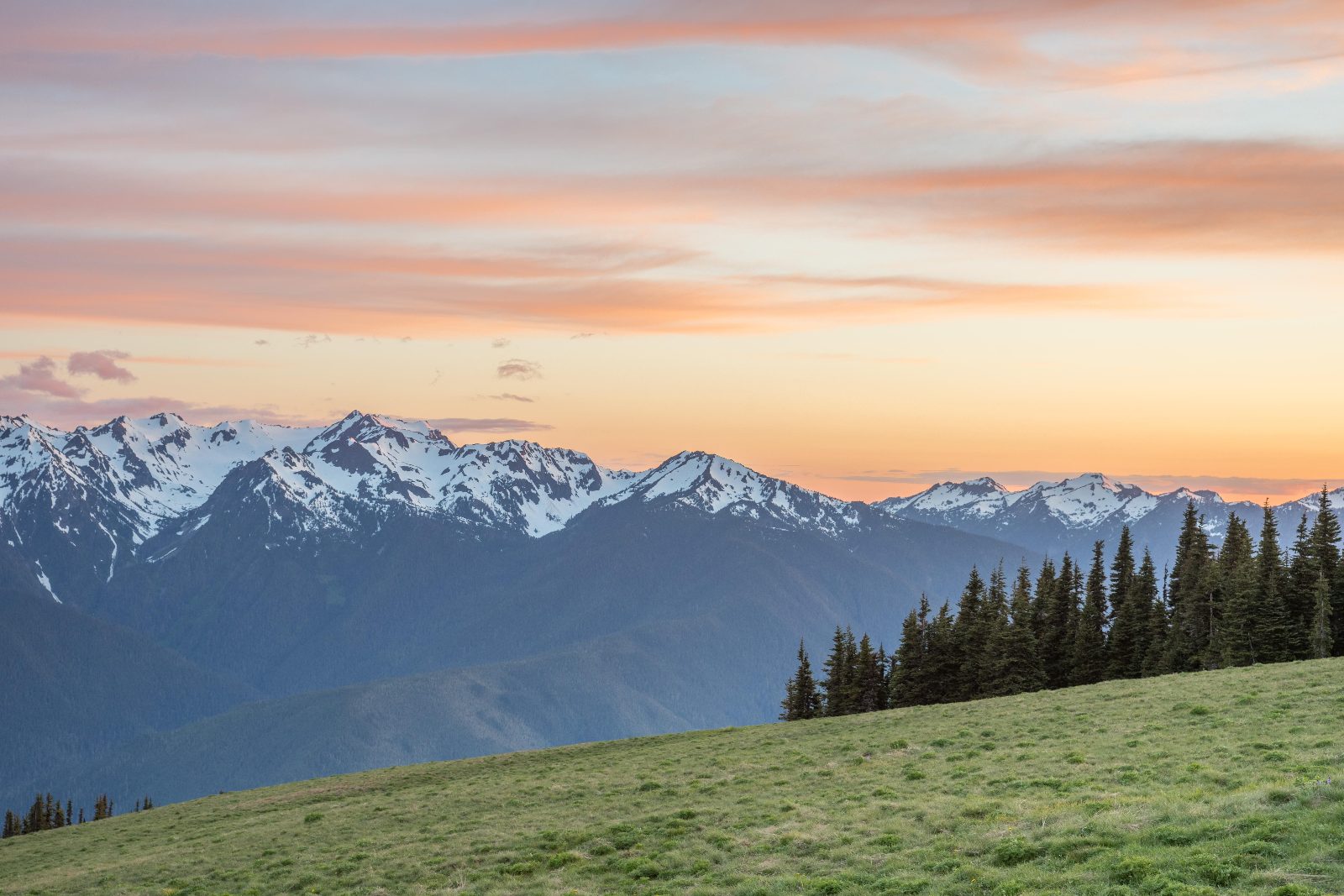
Arrive between 06:00 and 09:00 to avoid peak crowds and limited parking at popular trailheads. The paved paths provide unobstructed views of the interior Olympic Mountains and the Strait of Juan de Fuca.
Explore the deep, glacier-carved waters of Lake Crescent. Park near the Storm King Ranger Station for a mostly flat, 1.8-mile round-trip walk through old-growth canopy to a 90-foot waterfall.
Continue to the Sol Duc region to access the Sol Duc Falls trailhead. This 1.6-mile loop guides you to a wooden bridge overlooking the river as it drops into a narrow, rocky canyon.
Explore the Hall of Mosses and Spruce Nature trails on the western side of the peninsula. Walking these routes in the morning provides cooler temperatures and higher chances of spotting resident Roosevelt elk among the Sitka spruce.
Relocate to the Pacific coastline to walk along shorelines scattered with massive driftwood logs. Always consult local tide charts before hiking the 1.5 miles to the Hole-in-the-Wall rock formation to avoid getting trapped by rising water.
The most effective time to visit Olympic National Park is during the shoulder seasons of May, June, September, and October to balance accessible high-elevation roads with manageable visitor numbers. Arriving early is essential for navigating the park efficiently.
Warm, dry; highs 70–75°F. All roads and trails are accessible.
Expect heavy congestion at popular sites like Hurricane Ridge and Lake Crescent. Planning for early arrival is necessary.
Mild; highs 55–65°F. Snow begins to clear or arrive.
Higher elevation areas like Hurricane Ridge typically open by late spring. Weather remains variable, requiring layered clothing.
Cool and wet; highs 40–45°F. Frequent rain and mountain snow.
Many high-elevation roads close due to snow. Visitors should monitor road conditions closely before departing.
—
Arriving within the best arrival window of 06:00–09:00 helps avoid peak crowds and limited parking at popular trailheads.
Verdict: For the fewest crowds and best road access, plan your trip for a weekday morning in May or October.
Olympic National Park remains accessible throughout the week to accommodate visitors. The park maintains consistent operating hours every day of the year.
Complete these preparatory steps before leaving Seattle to ensure a smooth journey to Olympic National Park.
Everything you need to know about how far is olympic national park from seattle
The driving distance varies based on your destination, but many visitors wonder how far is Olympic National Park from Seattle when planning their journey to the wilderness. Generally, it takes about 2.5 to 3.5 hours to reach the park boundaries from the city.
Travelers often ask how far is Olympic National Park from Seattle to decide between driving their own vehicle or booking a guided experience. Utilizing a dedicated tour service removes the stress of navigating ferry schedules and winding coastal roads.
While determining how far is Olympic National Park from Seattle, remember that travel time depends on your specific trailhead or visitor center destination. Planning for a full day ensures you have ample time to explore the diverse temperate rainforests and alpine vistas.
Access to the park requires a standard 7-day vehicle pass, which is priced at 30 USD. This fee provides entry for one private vehicle and its passengers to enjoy the varied landscapes throughout the park.
To maximize your visit and ensure you find a spot, the best arrival window is 06:00–09:00. Arriving early helps avoid peak crowds and limited parking at popular trailheads.
The park is open daily from 00:00–23:59, providing continuous access for visitors. Always check the official site before departing, as some areas or roads may have seasonal restrictions.
Many visitors inquire how far is Olympic National Park from Seattle to see if a day trip is feasible. While the park is vast, a well-planned itinerary allows you to experience key landmarks like Hurricane Ridge or Lake Crescent.
The park remains open year-round, though visitor services and road accessibility can change with the seasons. It is recommended to verify local conditions, especially if you plan to visit the higher elevations during winter months.